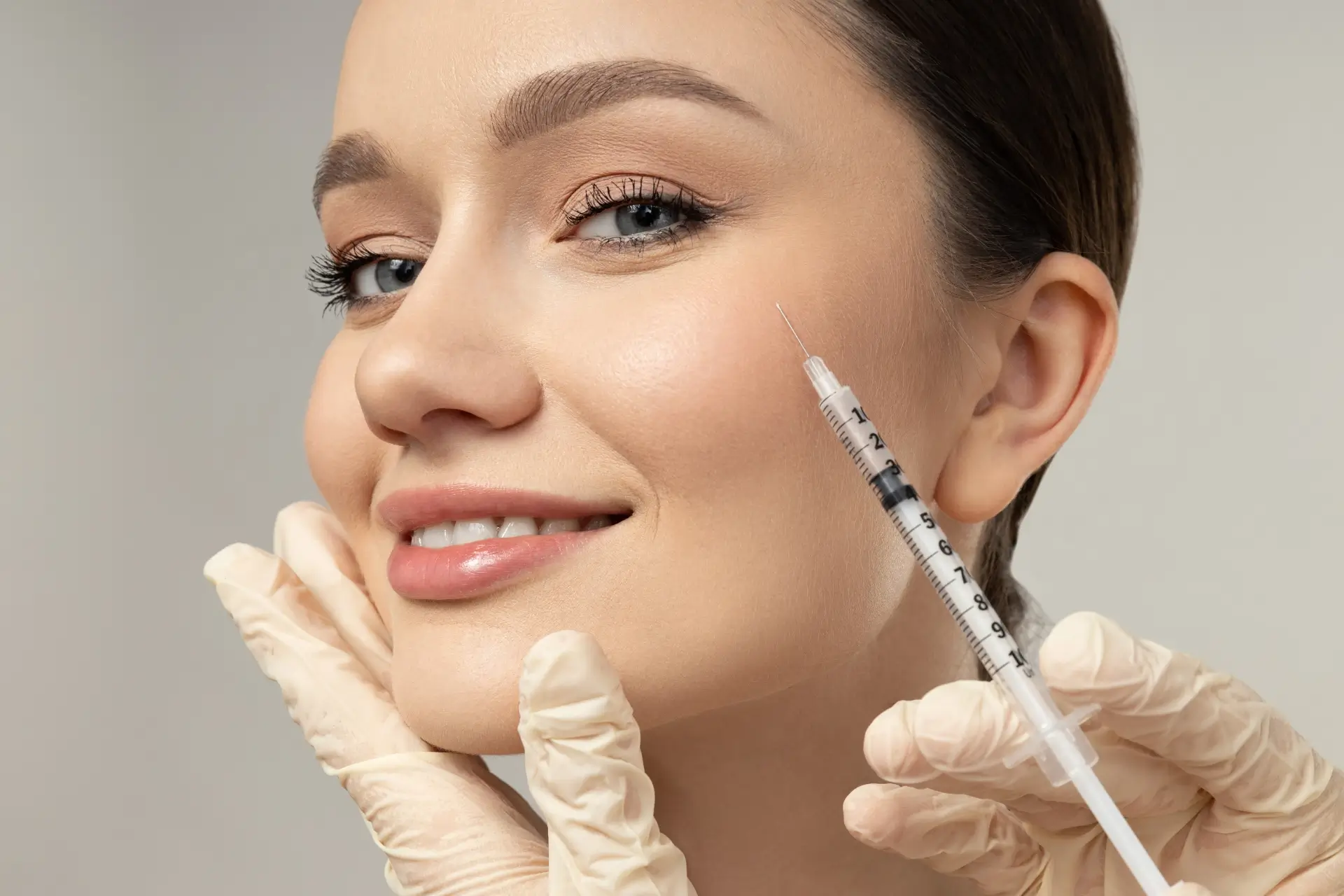
Botox is a prescription neuromodulator that temporarily relaxes the muscles behind expression lines, while dermal filler is a hyaluronic-acid gel that restores volume and structure the face has lost. One quiets movement; the other rebuilds support. Most people benefit from one, the other, or a carefully considered combination of both.
How are Botox and dermal filler actually different?
The two treatments work in entirely different ways, which is why they’re rarely interchangeable. Botox belongs to a class of injectables called neuromodulators: it works at the nerve-muscle junction, temporarily blocking the signal that tells a specific muscle to contract. A pharmacological review in Clinical, Cosmetic and Investigational Dermatology describes how botulinum toxin blocks the release of acetylcholine, producing temporary, localized muscle relaxation (Satriyasa, 2019). Dermal filler, by contrast, does no such thing to muscles at all — it’s a hyaluronic-acid gel placed beneath the skin to physically add volume, support a flattened contour, or smooth a fold. Hyaluronic acid is a substance the body already produces, and filler formulations vary in thickness and cross-linking to suit different depths and areas (Tezel & Fredrickson, Journal of Cosmetic and Laser Therapy, 2008). In short: Botox changes what a muscle does; filler changes what a space contains.
Dynamic lines vs. static lines: why the distinction matters
This is the single most useful concept for understanding which treatment fits which concern.
- Dynamic lines only appear when you move — frowning, squinting or raising your brows. Because they’re driven by muscle activity, they respond well to a neuromodulator like Botox.
- Static lines and volume loss are visible even at rest, often from years of dynamic movement etching a line in, or from natural volume loss that lets skin fold or fall. These generally respond better to filler, which restores the missing support.
Many faces have both patterns at once, which is exactly why a proper assessment — not a one-size-fits-all package — matters more than the marketing around either product. It’s also the most common question we hear from Winnipeg clients booking their first consultation: “which one do I actually need?”
What does each treatment typically address?
In practice, most Winnipeg clients fall into one of two groups: movement-driven lines, or volume that has softened or shifted with time. Here’s the general breakdown, always confirmed against your own face at consultation.
Botox is typically used for:
- Frown lines between the brows
- Horizontal forehead lines
- Crow’s feet around the eyes
Dermal filler is typically used for:
- Cheeks and midface volume loss
- Nasolabial folds (the lines from nose to mouth corners)
- Marionette lines (mouth corners to jawline)
- Lips, jawline and chin contouring
Botox vs. dermal filler at a glance
| Botox (neuromodulator) | Dermal filler (hyaluronic acid) | |
|---|---|---|
| What it is | A purified, prescription injectable that reduces targeted muscle activity | An injectable hyaluronic-acid gel that adds volume and structural support |
| How it works | Temporarily blocks nerve signals to a specific muscle | Physically fills space beneath the skin |
| What it treats | Dynamic wrinkles caused by repeated movement | Static volume loss, flattened contours, structural folds |
| Onset | Gradual; often noticeable within days, settling over about two weeks | Often visible right away, with any swelling settling over one to two weeks |
| How long it lasts | Temporary, commonly a few months; varies by person | Temporary, often longer than Botox; varies by product and area |
| Typical areas | Forehead, between the brows, crow’s feet | Cheeks, nasolabial folds, marionette lines, lips, jawline/chin |
How long do Botox and filler results last?
Neither treatment is permanent, and duration always varies by individual, dose and treated area — but the two tend to differ in a fairly predictable way. Botox results typically last a few months before muscle activity gradually returns to normal, which is why most people who continue treatment book follow-up sessions a few times a year. Dermal filler often lasts longer, in part because hyaluronic-acid gels are formulated with different degrees of cross-linking that resist the body’s natural breakdown at different rates (Tezel & Fredrickson, Journal of Cosmetic and Laser Therapy, 2008). A denser filler placed deep in the cheek, for example, may hold its structure considerably longer than a softer filler used in the lips. None of this is guaranteed for any one person — metabolism, activity level and the specific product all play a role — which is why your practitioner should walk you through realistic timelines for your plan rather than a generic average.
What does “natural-looking” actually require?
“Natural” isn’t an accident — it’s the product of restraint, technique and an honest read of your anatomy. With Botox, that means treating the muscles that actually need softening, at a dose that preserves normal expression rather than eliminating it. With filler, it means respecting the face’s existing proportions and adding volume where structure has genuinely been lost, rather than chasing a trend. A review comparing botulinum toxin and dermal filler use in facial rejuvenation notes that these treatments are most effective — and most natural in outcome — when used thoughtfully, sometimes together, rather than as a maximal single intervention (Berbos & Lipham, 2010). At Flawless Derma Centre, that’s the whole philosophy: we’d rather under-treat and see you again than push more product than your face actually needs.
Is it safe? Why a conservative, physician-led approach matters
Botox and dermal filler are both prescription medical treatments, not cosmetics-counter products, and Health Canada’s drug product listing for Botox (onabotulinumtoxinA) confirms it is regulated as a Schedule D prescription drug administered by injection (Health Canada, Drug Product Database). That means real contraindications exist — including certain neuromuscular conditions, pregnancy and breastfeeding, active skin infection at the injection site, and specific allergies — and possible side effects range from temporary bruising and swelling to, less commonly, asymmetry or unwanted effects on nearby muscles. Suitability is never assumed; it’s assessed individually, every time, based on your health history and goals. This is also where a physician-led clinic differs from a walk-in injector: our founding physician, Dr. Kourosh Harandi, oversees care, and no one leaves with more units or syringes than their face actually calls for. If you’re weighing your first treatment, our first-timer’s guide to Botox in Winnipeg covers what a consultation and appointment look like in more detail.
Can Botox and filler be used together?
Often, yes — and for many faces, combining them addresses more of the picture than either alone. A typical example: Botox softens the crow’s feet and forehead lines that show up when you smile or raise your brows, while filler restores volume in cheeks that have flattened with time, indirectly softening nasolabial folds too. Sequencing and total product amounts are decided at consultation, not before, because every face carries movement patterns and volume loss differently. We see clients from across Winnipeg for exactly this kind of individualized planning — from River Heights and Tuxedo to Wolseley, St. James and the West End — and the plan we build always starts with what your face needs, not a package.
What to expect at a consultation
- Assessment. We look at your movement patterns, volume, and goals — not a checklist.
- Health history. We confirm there’s no contraindication and discuss possible side effects honestly.
- A conservative plan. We recommend Botox, filler, both, or sometimes neither, along with transparent pricing.
- Treatment and follow-up. Quick in-clinic injections, then a review to keep future sessions calibrated to you.
Botox is priced per unit and dermal filler is priced per syringe, since your total depends on the amount your goals require — both are published on our injectables pricing, and your exact quote is confirmed at consultation, never estimated higher. If you’d like a second opinion or an honest read on which treatment actually fits your face, our team — including Priscila Ferreira, our certified SharpLight practitioner — is happy to walk Winnipeg clients through it without any pressure to book. Learn more about our injectables and facial contouring options, or book a consultation to get a plan built around your face.